


Ganapathi Kolam (Pisachu Kolam) | Sacred Beginning of Padeni
Ganapathi Kolam (Pisachu Kolam): The Sacred Beginning of Padeni
Introduction to Ganapathi Kolam
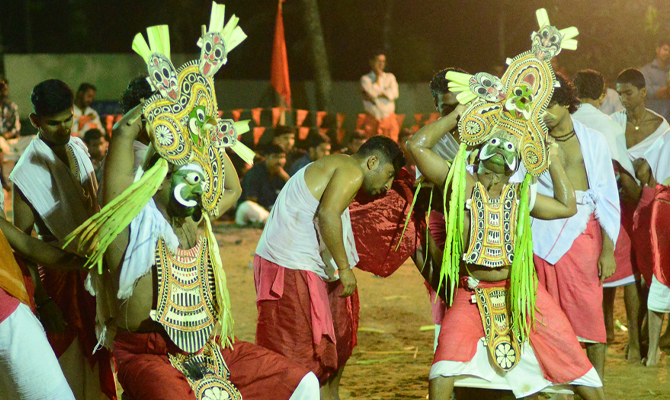
Ganapathi Kolam, also known as Pisachu Kolam, is one of the most important ritual performances in the ancient temple art form called Padeni (Padayani). It is traditionally the first kolam performed, marking the beginning of the Padeni ritual. Just as Lord Ganapathi is worshipped before starting any auspicious activity, Ganapathi Kolam is performed to remove obstacles and prepare the sacred space for the rituals that follow.
Although the name “Pisachu” may sound frightening, this kolam does not represent evil. Instead, it symbolizes the control and transformation of negative or uncontrolled energies into protective forces. Ganapathi Kolam plays a vital role in creating spiritual balance and harmony during Padeni.
Why Ganapathi Kolam Is Performed First
In Padeni tradition, it is believed that no ritual should begin without first seeking divine permission and protection. Ganapathi Kolam fulfills this role by cleansing the ritual ground and calming unseen forces. This ensures that the remaining kolams can be performed without disturbance.
The kolam represents the idea that difficulties and obstacles are part of life, but with faith and devotion they can be overcome. By performing Ganapathi Kolam at the start, devotees symbolically place the entire Padeni ritual under divine protection.
Form and Appearance of Ganapathi Kolam
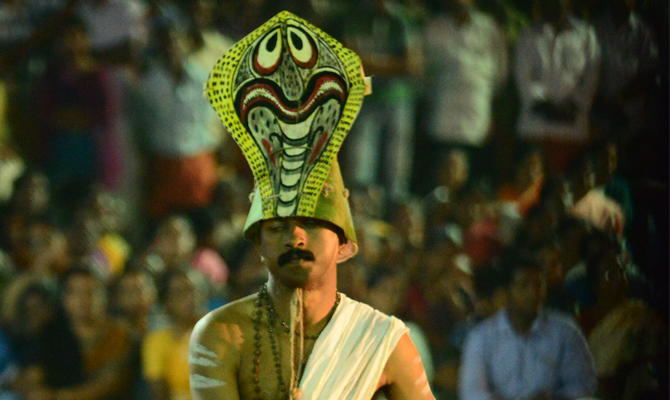
Ganapathi Kolam is created using natural materials such as areca nut sheaths, bamboo, cloth, and plant-based colours. The traditional colours used are black, white, and red, each symbolizing power, purity, and divine energy.
Compared to larger kolams like Bhairavi or Kalan, Ganapathi Kolam is simpler in size and design. However, its expressions are strong and meaningful. The performer wears the kolam as a face covering or headpiece and brings it to life through disciplined movements and rhythm.
The Ritual Performance
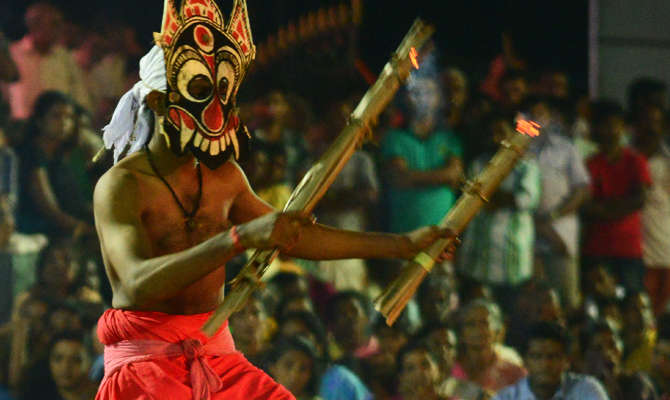
The performance follows strict traditional rules passed down through generations. It is accompanied by traditional drum beats that create a powerful and sacred atmosphere. The steps are firm and grounded, symbolizing stability, control, and balance.
The facial expressions are intense yet controlled, reflecting the dual nature of fear—powerful but manageable. Ornaments, traditional colours, and symbolic markings enhance the spiritual depth of the kolam.
The movements of Anthara Yakshi Kolam are precise, rhythmic, and restrained. Unlike aggressive kolams, the performance emphasizes balance, control, and inner focus. The performer must maintain stability while executing ritual steps, symbolizing mastery over mental instability.
The movements often follow circular patterns, representing the cycle of life and cosmic order. Ritual songs sung during the performance praise divine power and seek blessings for the community.
Spiritual Meaning of Pisachu Kolam
The Pisachu aspect of Ganapathi Kolam represents raw and uncontrolled energies present in nature and human life. Instead of destroying these energies, Padeni rituals aim to transform and contain them through sacred performance.
The kolam teaches that fearsome appearances do not always represent danger. Many divine forms appear intense in order to protect devotees and restore balance. Ganapathi Kolam reminds us that divine grace can take many forms.
Cultural Importance of Ganapathi Kolam
Ganapathi Kolam is not performed as entertainment but as a sacred duty. It is carried out by trained performers who observe ritual discipline, purity, and devotion. The kolam connects present generations with ancestral knowledge and temple traditions.
For the community, Ganapathi Kolam symbolizes faith, continuity, and cultural identity, bringing people together in collective worship.
Ganapathi Kolam in Today’s Padeni Tradition
Even today, Ganapathi Kolam remains an essential part of Padeni rituals. Temples continue to perform it with devotion, preserving its traditional form and spiritual meaning.
For visitors and devotees, witnessing Ganapathi Kolam offers deep insight into Kerala’s ritual traditions and spiritual philosophy.
Conclusion
Ganapathi Kolam (Pisachu Kolam) is the sacred gateway to Padeni. Through its symbolic form, disciplined movements, and deep spiritual meaning, it prepares both the ritual space and the minds of devotees. As the first kolam of Padeni, it reminds us that every beginning requires devotion, balance, and divine guidance.