Symbolism of Pisachu Kolams in Padeni
Understanding Pisachu Kolams
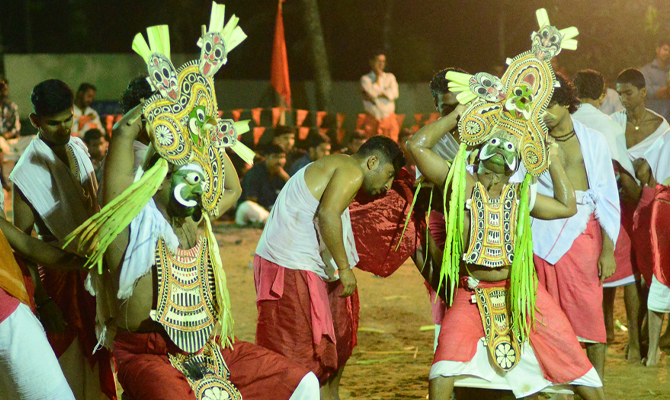
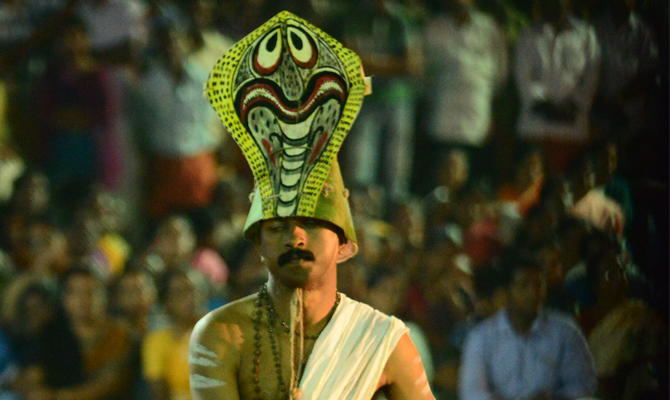
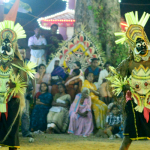
Pisachu Kolams are among the most symbolic and meaningful ritual forms performed during Padeni (Padayani). Though their appearance may seem fierce or unusual, these kolams are not meant to represent evil. Instead, they symbolize powerful energies that exist in nature and human life, which are brought under divine control through ritual worship.
In traditional belief, Pisachu represents uncontrolled or wandering energies. The ritual purpose of the Pisachu Kolam is to transform these forces into protective and benevolent powers, ensuring peace, health, and spiritual balance for the community.
Different Forms of Pisachu Kolams
There are several variations of Pisachu Kolams, each with slight differences in form, movement, and expression. While the outer appearance may vary, the underlying purpose remains the same — to appease and regulate unseen forces that may disturb harmony.
Some Pisachu Kolams appear intense or humorous, while others are solemn and powerful. These variations reflect the many forms in which energy manifests in nature. Through Padeni rituals, these energies are acknowledged, respected, and ritually contained.
Ritual Songs and Movements
The songs sung during Pisachu Kolam performances are devotional and invocatory in nature. They praise divine power and seek protection for the devotees. The rhythm, steps, and hand gestures are fixed according to tradition and are performed with strict discipline.
The movements are strong and grounded, symbolizing control and stability. Circular patterns are often used to represent cosmic order and continuity. Every step and gesture has ritual meaning and is not performed casually.
Spiritual Meaning of the Pisachu Form
Spiritually, Pisachu Kolams teach that fearsome forms do not always represent danger. In Padeni philosophy, divine forces may appear intense in order to protect and purify. The kolam reminds devotees that balance is achieved not by destroying negative forces, but by transforming them through devotion and ritual order.
This belief reflects a deep spiritual understanding — that all energies, when guided by divine discipline, can become sources of protection rather than harm.
Cultural and Community Importance
Pisachu Kolams are not performed as entertainment. They are sacred offerings carried out by trained performers who follow ritual purity and discipline. The kolams strengthen community faith and reinforce traditional belief systems passed down through generations.
Through these performances, the community collectively participates in worship, seeking relief from illness, fear, and negative influences. The symbolism of Pisachu Kolams continues to hold relevance even in modern times.
Conclusion
The symbolism of Pisachu Kolams lies in their ability to transform uncontrolled energies into divine protection. Through disciplined movement, ritual songs, and sacred form, these kolams remind devotees that harmony is achieved through understanding, balance, and devotion. As an essential part of Padeni, Pisachu Kolams uphold the spiritual philosophy and cultural depth of Kerala’s temple traditions.