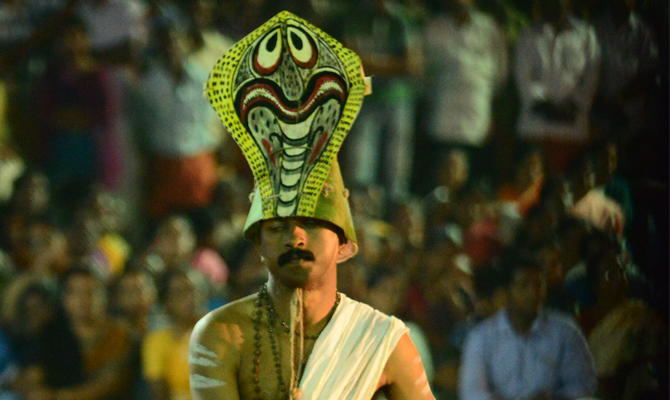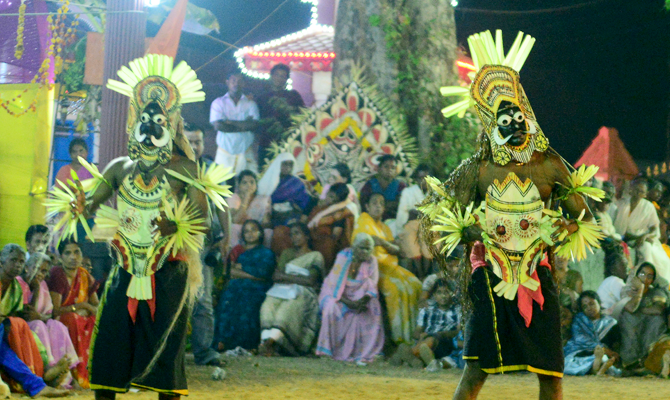
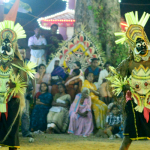
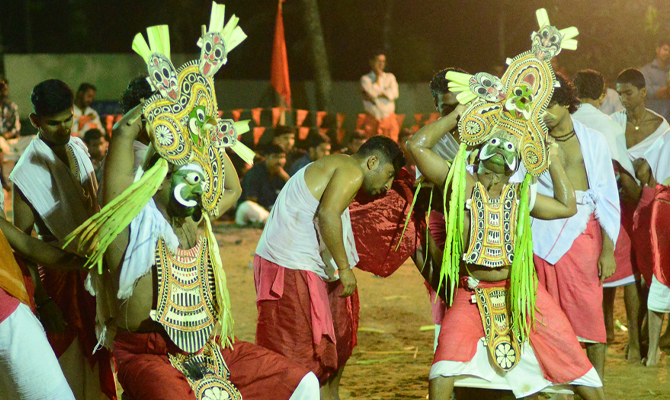
Kalan Kolam is one of the most intense and fearsome kolams performed as part of the Padayani ritual tradition . Representing the force of time, death, and destiny, Kalan Kolam serves as a powerful reminder of life’s impermanence and the cosmic order governing existence.
Spiritual Significance
Kalan, the embodiment of time and mortality, is believed to remove evil influences and protect the community from unseen dangers. Witnessing Kalan Kolam is considered spiritually purifying, helping devotees confront fear and surrender to divine will.
Artistic Features
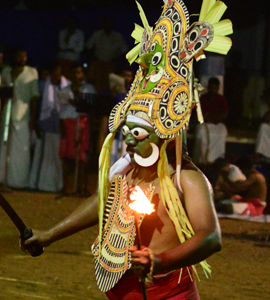
Kalan Kolam is crafted using traditional natural materials such as arecanut spathes, bamboo frames, tender coconut leaves, and natural pigments. The kolam often displays a terrifying expression with wide eyes, protruding teeth, and bold color contrasts, symbolizing authority over life and death.
Ritual Performance
The performance of Kalan Kolam usually takes place late at night during Padayani. Accompanied by powerful chenda rhythms and ritual chants, the kolam moves with commanding energy, creating an atmosphere of awe and reverence within the temple grounds.
Cultural Importance
Kalan Kolam plays a vital role in preserving the ritual philosophy of Padayani. Alongside forms such as Shiva Kolam, Bhagavathi Kolam, and Bhairavi Kolam, it reflects the belief that destruction and fear are necessary forces for renewal and spiritual balance.