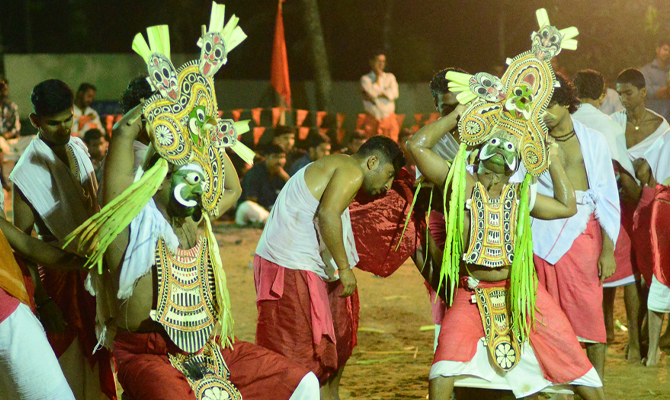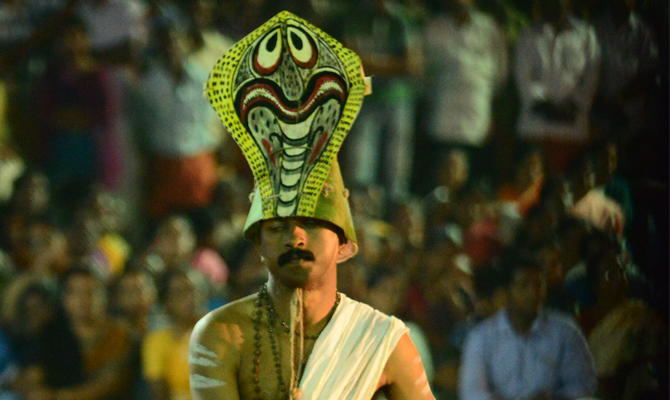
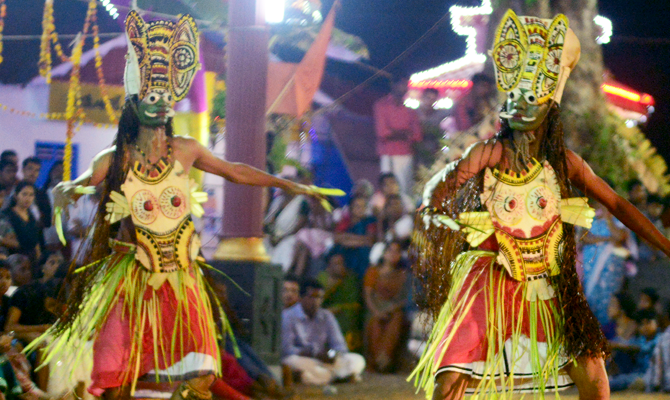
Anthara Yakshi Kolam is one of the most profound and psychologically symbolic kolams performed in Padeni (Padayani). Unlike other Yakshi Kolams that represent external nature spirits, Anthara Yakshi focuses on the inner world of the human mind—fear, anxiety, emotional imbalance, and hidden disturbances that affect mental peace.
The word “Anthara” means inner or internal. This kolam represents forces that live within a person rather than outside. Through ritual performance, these inner disturbances are brought under divine control, offering clarity, calmness, and spiritual stability.
Symbolism of Anthara Yakshi
Anthara Yakshi symbolizes the unseen fears that humans carry—fear of the unknown, fear of failure, emotional unrest, and psychological suffering. Traditional belief holds that such disturbances can weaken a person spiritually and mentally if not addressed.
Rather than denying fear, Padeni philosophy teaches recognition and transformation. Anthara Yakshi Kolam represents the process of confronting inner fear through ritual discipline, devotion, and divine intervention.
Appearance and Costume
One of the defining features of Anthara Yakshi Kolam is its large and elaborate headgear, securely fastened to the performer’s body. The weight and balance required to carry this structure symbolize the mental discipline needed to control inner disturbances.
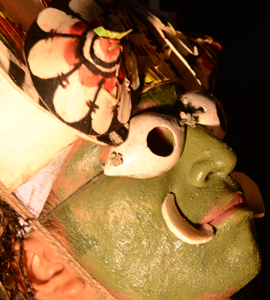
The facial expressions are intense yet controlled, reflecting the dual nature of fear—powerful but manageable. Ornaments, traditional colours, and symbolic markings enhance the spiritual depth of the kolam.
The movements of Anthara Yakshi Kolam are precise, rhythmic, and restrained. Unlike aggressive kolams, the performance emphasizes balance, control, and inner focus. The performer must maintain stability while executing ritual steps, symbolizing mastery over mental instability.
Ritual Performance and Movement
Drum rhythms are steady and hypnotic, helping create a meditative atmosphere. Ritual songs sung during the performance invoke protection, courage, and inner strength.
Spiritual and Cultural Importance
Anthara Yakshi Kolam holds special relevance in a world increasingly affected by stress, anxiety, and emotional imbalance. The kolam reminds devotees that healing begins within and that divine grace supports those who seek inner peace.
This kolam is spiritually connected with Marutha Kolam, which focuses on physical healing, and Yakshi Kolams, which represent natural forces. Together, they form a holistic view of protection—body, mind, and environment.
Drum rhythms are steady and hypnotic, helping create a meditative atmosphere. Ritual songs sung during the performance invoke protection, courage, and inner strength.
This kolam is spiritually connected with Marutha Kolam, which focuses on physical healing, and Yakshi Kolams, which represent natural forces. Together, they form a holistic view of protection—body, mind, and environment.
Conclusion
Anthara Yakshi Kolam is a powerful reminder that Padeni rituals go beyond external worship. By addressing inner fear and emotional imbalance, this kolam teaches the importance of mental discipline, self-awareness, and divine surrender. Through ritual movement and devotion, Anthara Yakshi offers protection not just from unseen forces, but from the fears within ourselves.