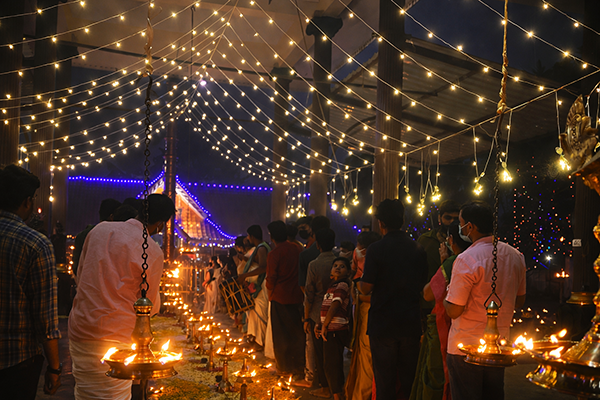
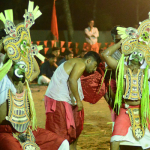
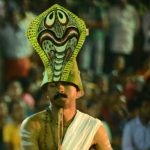
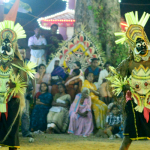
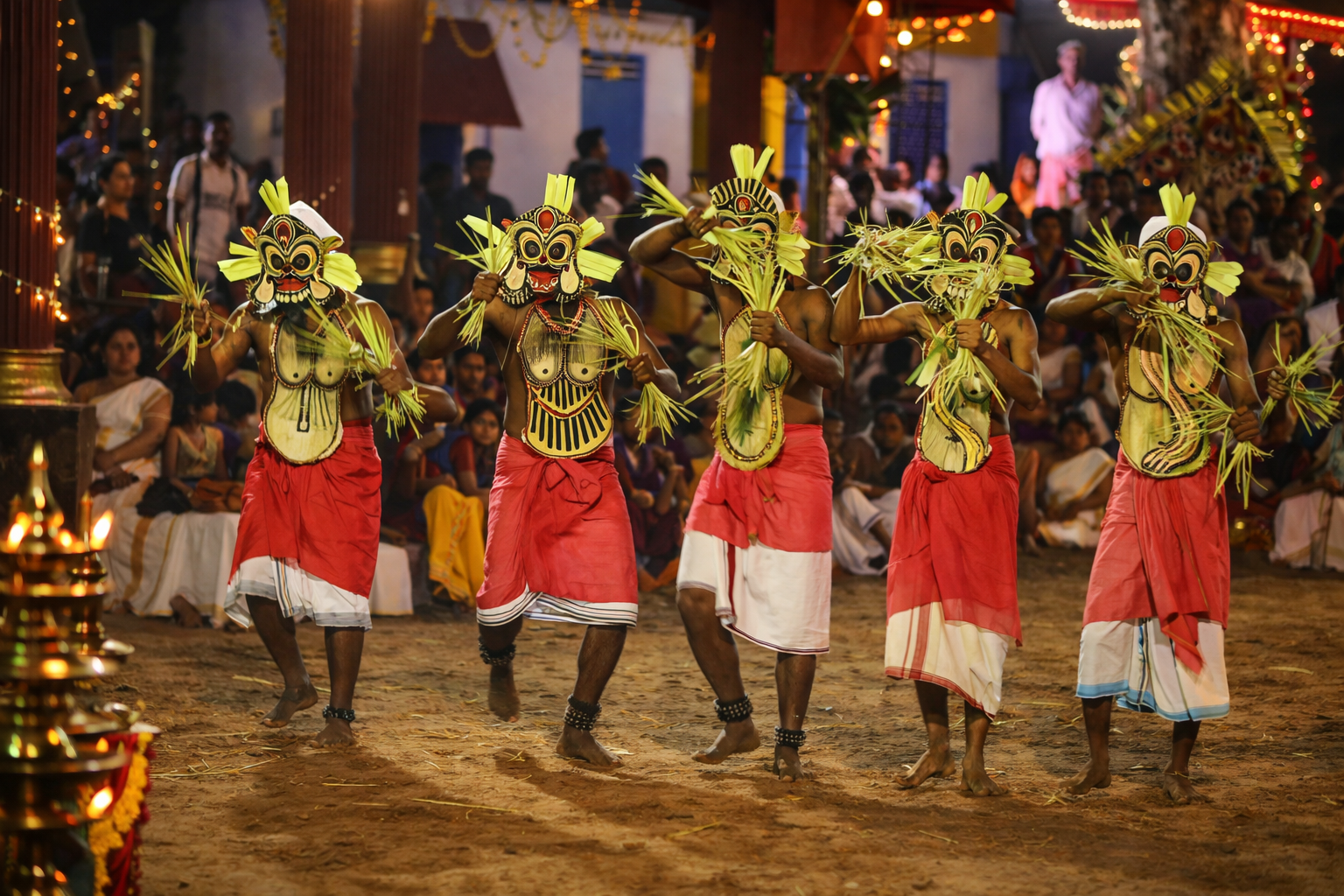
Padayani is more than performance — it is a living ritual theatre that blends myth, devotion, folk art, and community participation. The masked figures (kolams) — crafted from arecanut palm sheaths and painted with earthy pigments — represent divine, demonic, and spirit-forms in animated dance and drama. The percussion rhythms, the lantern-lit nights, and the chants together create a powerful ambience, reminding viewers that Padayani is both an offering to the goddess and a communal prayer for protection, prosperity, and spiritual cleansing.
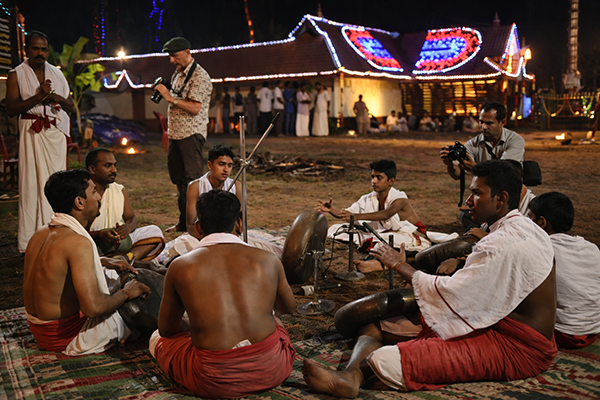
Thappu Melam
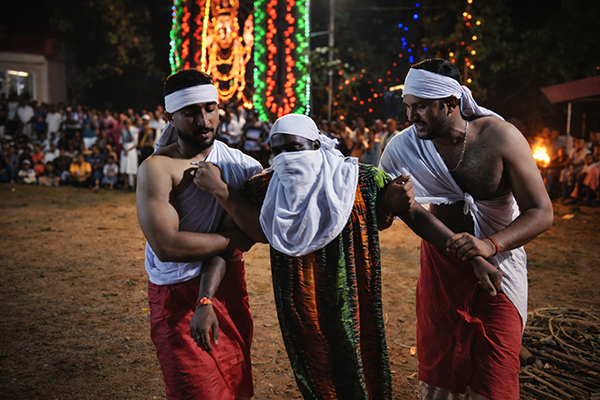
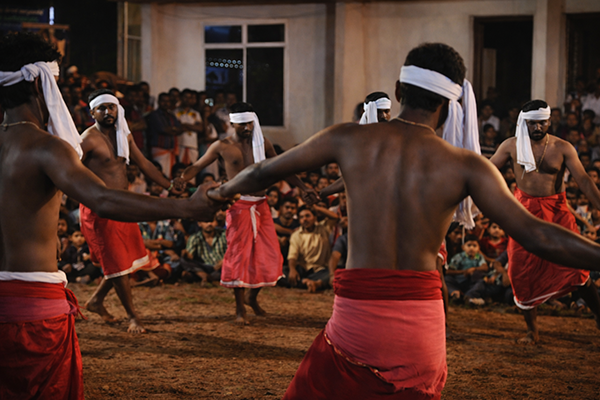
An important ceremony held on the third day of the festival is the ritual of Pulavritham. It is also known by the names of Pula Nrutham, Pulanritham Kali or Pula dance. All the performers covering their head with a towel or a cap made of spathe starts to sing and dance with devotion. It begins with a hymn sung in praise of Lord Ganapathi. The harmonious dance steps remind one about the agrarian culture of Kerala.

Thavadi
Dance movements that are gentle with synchronised movements of the hands and the feet, following the rhythmic beats of the Ilathaalam or cymbal and Thappu mark the beginning of Thavadi dance. Thavadi dance is one of the rituals in Padayani, performed by a group of men wearing towels wrapped around the head. They are accompanied by one or two dancers wearing the masks of Appoppan, Ammumma or Maramotha. The main performer moves in front taking the steps and holding the kaimani. This kind of Thavadi is known by the name of Ner Thavadi.

Ganapathi Kolam
This is first kolam to perform in the Padayani Kalam. It is also known by the name Pisachu Kolam. The mask of Ganapathy Kolam is made of a single arecanut spathe and has a chain made of another leaf. The Kolam wears white dhoti and tender coconut leaves are tied around it like a skirt. While performing it holds two chootukatta (burning torches). This kolam is performed to please the pantheon of spirits. It is also known as the Ganapathy Pisachu Kolam.